
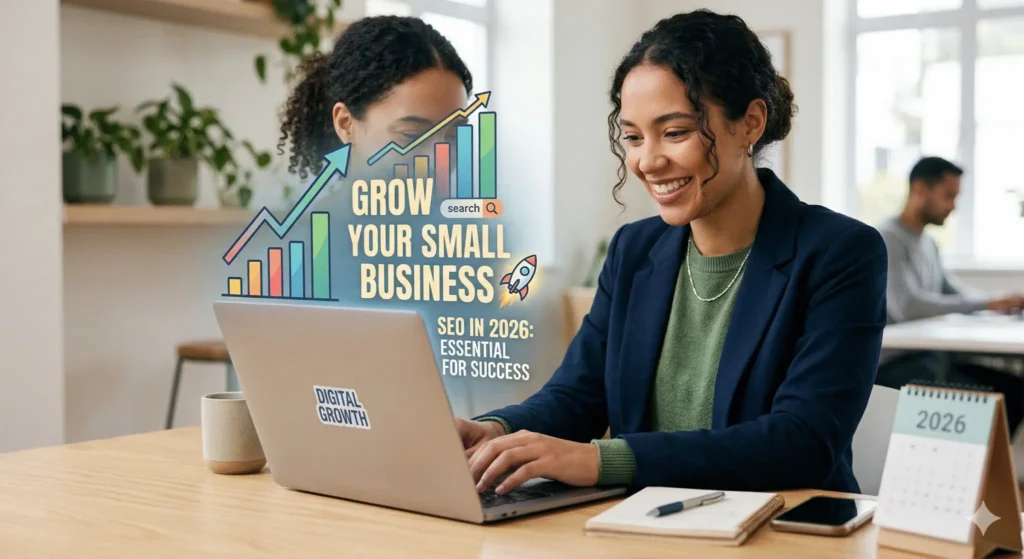
Why every small business needs SEO In 2026
In 2026, the digital landscape is more crowded and competitive than ever. For a small business, being found online is not just an advantage; it is a necessity for survival and growth. Search Engine Optimization (SEO) has evolved from a niche marketing tactic into the foundation of a modern business strategy. If your small business isn’t prioritizing SEO in 2026, you are essentially making yourself invisible to the vast majority of your potential customers. Here is why every small business needs SEO in 2026.
The Death of the Yellow Pages and Traditional Ads
In 2026, the shift from traditional advertising to digital is complete. The days of relying on phone books, local newspaper ads, or even large billboards to drive significant foot traffic are long gone. When consumers need a product or service, such as a plumber, a boutique clothing store, or a local accountant, their first and often only instinct is to search online. If your business does not appear in the top search results, you simply do not exist to that customer. SEO ensures you are present where your customers are looking.
Trust, Credibility, and the Power of AI
The nature of search has changed. By 2026, AI-integrated search engines like Google’s Search Generative Experience and Bing’s AI chat are the norm. Consumers no longer just look for links. Instead, they look for answers, authority, and trust. A robust SEO strategy in 2026 is not just about keywords; it is about E-E-A-T, which stands for Experience, Expertise, Authoritativeness, and Trustworthiness.
-
Trust: Appearing at the top of organic search results implies to a consumer that your business is reputable. Users trust Google to provide them with the best answers. If Google trusts you enough to rank you highly, consumers will too.
-
AI Needs Content: To answer user queries, AI search tools need high-quality content. SEO helps you structure and create that content, including blog posts, FAQs, and service pages, so that AI algorithms can understand and recommend your business.
Cost-Effectiveness in an Inflationary Market
Advertising costs, particularly for Paid Per Click (PPC) campaigns on platforms like Google and Meta, continue to rise as competition stiffens. For a small business with limited budgets, relying solely on paid ads is a recipe for diminishing returns. While SEO requires an investment of time and resources upfront, its long-term return on investment (ROI) is significantly higher than paid advertising.
-
Compounding Value: A well-optimized piece of content, such as a guide to a common problem in your industry, can attract customers for years without you paying for every click.
-
Lower Customer Acquisition Cost (CAC): In the long run, SEO offers one of the lowest CACs because it targets users who are already actively seeking what you offer.
Zeroing In on Local Customers (The “Near Me” Economy)
For small businesses, local SEO is non-negotiable in 2026. The integration of mobile devices and AI has amplified the importance of “near me” searches and local intent. If you run a coffee shop, a dental practice, or a hardware store, your primary customers are within a few miles of your location.
-
Map Dominance: SEO ensures that your business appears in the “Local Pack,” which refers to the map results on Google Maps and search queries. This is often the first thing mobile users see.
-
AI and Local Intent: AI search results are highly hyper-local. When a user asks an AI assistant where to find the best pizza nearby, the assistant pulls that information based on robust local SEO data, your website content, your Google Business Profile, and customer reviews.
Mobile Dominance and the “Always-On” Consumer
In 2026, the majority of web traffic comes from mobile devices and voice-activated assistants like Alexa, Siri, and AI-powered mobile tools. The way people search on mobile is different because they want fast answers, easy navigation, and immediate solutions. A critical component of modern SEO is Technical SEO, which focuses on:
-
Page Load Speed: Mobile users will not wait more than a few seconds for a site to load. A slow site equals lost revenue.
-
Mobile-Friendliness: If your site is hard to use on a phone, users will quickly leave.
-
User Experience (UX): SEO forces you to improve the overall usability of your website, making it easier for customers to contact you, book an appointment, or make a purchase.
The Long Game of Compounding Organic Traffic
Unlike paid ads, which stop driving traffic the moment you stop paying, SEO is an investment in your business’s long-term digital infrastructure. The content you create, the backlinks you earn, and the technical optimizations you make today build momentum over time. A robust SEO foundation established in 2026 will continue to deliver organic traffic and leads in 2027, 2028, and beyond, long after the initial effort was made.
Conclusion
In 2026, a small business without SEO is essentially a ship without a sail in the middle of a digital ocean. While large corporations can brute-force their visibility with massive ad budgets, SEO provides a level playing field where small businesses can dominate locally, establish trust, and capture high-intent customers. SEO is no longer an extra marketing expense. It is the fundamental strategy for building a sustainable, trustworthy, and visible small business in the modern economy.
by Safana Mashood (safanap.com)